Jason Hafso Real Estate Blog

Stay up to date with new listings, open houses and market news

Check out some of our latest activity and circle back to this page for more real estate updates that impact your buying and selling decisions.

RSS

Porch Pirates vs. Prairie Winters: Protecting Your Holiday Deliveries

Black Friday is November 27, and for many of us the holiday shopping happens online. That means a lot of boxes sitting on a lot of front steps. In a FedEx survey by Angus Reid, 1 in 10 Canadians said they'd had a package stolen in the past year, and two-thirds of shoppers said they worry about it (CP24).

Here in the Edmonton area, there's a second enemy: our winters. A box left on the step at −25°C can mean frozen candles, cracked electronics or a soggy box after a chinook melt. Here's how to beat both.

Free fixes you can do today

  • Schedule deliveries for when you're home. Most carriers let you pick a day or change it in their app.

  • Use delivery notes. Ask the driver to leave packages behind a planter, at the side door or somewhere out of sight from the street.

  • Ship to a pickup point. Amazon lockers, Canada Post counters and many retail stores hold parcels for free.

  • Send it to work. If your workplace allows it, this may be the easiest fix of all.

  • Ask a neighbour. A retired neighbour who's home during the day is the best security system there is. Return the favour with a holiday treat.

Small investments that pay off

  • Video doorbell: a visible camera alone deters most opportunistic thieves.

  • Lockable parcel box: bolt it down near the door. Look for an insulated model that also protects packages from the cold.

  • Better lighting: motion-sensor lights help after 4:30 p.m., when it's already dark this time of year.

  • Smart lock or garage opener: some carriers can deliver straight into your garage.

A homeowner bonus

Some of these upgrades do double duty. Good exterior lighting, a video doorbell and a smart lock are features buyers notice when you sell. They make a home feel safer and better cared for. If you're planning a move in the next year or two, they're smart, inexpensive improvements.

If a package goes missing

  1. Look around first. Check the side door, the garage, behind the planters and with your neighbours.

  2. Contact the seller. Many large retailers will replace or refund stolen items. Amazon's A-to-z Guarantee is one example.

  3. Contact the carrier. Ask about tracking photos and whether shipping insurance applies.

  4. Report it. If it's valuable or you have video, file a report with the Edmonton Police Service non-emergency line (780-423-4567) or the RCMP in Spruce Grove and Stony Plain. Reports help police know where to patrol.

Happy shopping, and here's to every box making it safely inside this season.

Thinking about a move in the new year? Call or text me at 780-964-7335 or email Jason@MyRealHome.com.

Read

The Bank of Canada Just Raised Rates. Here's What It Means in Real Dollars

On October 28, the Bank of Canada raised its key interest rate by a quarter point, from 2.25% to 2.5% (Bank of Canada). It's the first increase since 2023, and the Bank said more may follow if inflation, now around 3%, stays high. The next decision is on Wednesday, December 9.

"Rates are going up" sounds scary. Here's what it means for a typical Edmonton-area buyer.

The real number: about $56 a month

The average home in the Greater Edmonton Area sold for $466,080 in September 2026, up 2.9% from a year earlier (REALTORS® Association of Edmonton). With about 14% down, that's roughly a $400,000 mortgage.

Monthly payment on a $400,000 mortgage

  • 4.34%: $2,178 (−$56)

  • 4.59%: $2,234 (sample five-year fixed rate)

  • 4.84%: $2,290 (+$56)

  • 5.09%: $2,347 (+$113)

  • 5.34%: $2,404 (+$170)

25-year amortization, Canadian semi-annual compounding. 4.59% is a sample five-year fixed rate; the others show quarter-point steps. Not a rate quote.

One quarter-point move adds about $56 a month. That's real, but most budgets can handle it. Several hikes in a row would add up faster.

Who feels it, and when

  • Variable-rate borrowers feel it first. Your lender's prime rate usually moves with the Bank of Canada. Either your payment goes up, or more of your payment goes to interest instead of principal.

  • Fixed-rate borrowers are protected until renewal. Fixed rates follow the bond market, not the Bank of Canada directly, so they can move before or after an announcement.

  • Buyers may qualify for a little less. Lenders test you at the higher of 5.25% or your rate plus 2%. As rates rise, so does that test.

What a smart buyer does now

  1. Lock in a rate hold. Most lenders will hold a rate for 90 to 120 days. If rates rise, you're protected. If they fall, you can usually get the lower rate.

  2. Refresh your pre-approval. An approval from last spring may not reflect today's rules and rates.

  3. Use the slower market. Edmonton prices have been fairly steady, and there's more inventory than last year. Fewer competing buyers can mean better terms and room to negotiate.

  4. Leave room in your budget. Make sure you could handle a payment about $150 higher, plus property tax, utilities and maintenance.

The bottom line

A quarter-point hike is a nudge, not a wall. If the home, the price and the payment all fit your budget today, waiting for rates to drop is a gamble. Prices could rise while you wait.

If you're thinking about buying in the next year, let's chat. I can connect you with a trusted mortgage professional for a rate hold and show you what's selling in your price range right now. Call or text me at 780-964-7335 or email Jason@MyRealHome.com.

Read

Rent or Buy in Edmonton? The 2026 Math Nobody Shows You

You've probably seen the national headlines: the average rent in Canada is about $2,035 a month, and a typical mortgage payment is nearly the same. That's a Toronto and Vancouver story. Here in the Edmonton area, the numbers look very different, and in some ways they're more interesting.

Edmonton is one of Canada's most affordable big-city rental markets

In October 2026, the average asking rent in Edmonton was about $1,633 a month, down 2.3% from a year earlier (Rentals.ca / Urbanation). A one-bedroom unfurnished apartment averaged $1,274 (liv.rent, October 2026). Five of the six Edmonton areas liv.rent tracks are cheaper than they were a year ago.

For renters, that's good news. With lots of new apartments coming online, landlords are competing for tenants. Free parking, a free first month and included internet are showing up in listings again.

So why would anyone buy right now?

Owning is about where your money goes, not only how much you spend. Here's a simple, honest comparison using an average Edmonton condo.

Renting: about $1,658 a month

  • Rent: $1,633

  • Tenant insurance (estimate): $25

  • Goes toward your own equity: $0

Owning a condo: about $1,701 a month

  • Mortgage payment: $1,151

  • Condo fees (estimate): $350

  • Property tax (estimate): $150

  • Home insurance (estimate): $50

  • Goes toward your own equity: about $370

Owning example: $208,672 condo (Greater Edmonton average apartment condo price, REALTORS® Association of Edmonton, September 2026), 5% down, CMHC insurance added to the mortgage, 4.59% five-year fixed, 25-year amortization. Fees, tax and insurance are estimates. Every building is different.

The monthly bills are within about $40 of each other. But on the owning side, roughly $370 of the very first payment pays down your own loan. That amount grows every month. On the renting side, all of it is gone.

The part people forget: getting in the door

The biggest hurdle for most renters isn't the monthly payment. It's the down payment. On a $208,672 condo, 5% is about $10,400, plus closing costs. Two tools can help:

  • First Home Savings Account (FHSA): save up to $8,000 a year (to $40,000 total). Your deposits are tax-deductible, and qualifying withdrawals for a first home are tax-free.

  • RRSP Home Buyers' Plan: borrow up to $60,000 from your RRSP for your first home and repay it over 15 years.

Used together, a couple can build a down payment much faster than with regular savings alone.

When renting is still the smarter choice

Buying isn't right for everyone. Renting can make more sense if you:

  • Expect to move within 2 to 3 years (buying and selling costs need time to pay off)

  • Don't yet have an emergency fund on top of a down payment

  • Want flexibility while your career or family plans settle

The bottom line

In Edmonton, owning a modest condo now costs about the same each month as renting, and part of every payment builds your own wealth. Renters also have more choices and more negotiating room than they've had in years. Both are good positions to be in. The right answer depends on your timeline and savings.

If you'd like to see your own numbers, I'm happy to sit down with you, free and with no pressure. I'll pull real listings in the neighbourhoods you like, and we can connect with a mortgage professional to see exactly what you qualify for. Call or text me at 780-964-7335 or email Jason@MyRealHome.com.

Read

Radon in Alberta Homes: The One Thing You Can't Tell by Looking

By Jason Hafso, REALTOR® | MaxWell Challenge Realty · Reviewed September 30, 2026

Imagine two similar houses on the same Spruce Grove street. Both have finished basements. Both look well maintained. One has a low radon test result; the other has an elevated one. You couldn't pick which was which from a showing, a listing photo or the year they were built.

That is what makes radon an unusual home issue. You can't see, smell or taste it, and the clues we normally use to judge a house aren't very useful. The good news is that a simple test can give you an answer—and an elevated result can usually be addressed.

What is radon, and why are we hearing more about it?

Radon is a naturally occurring gas released from soil and rock. Outdoors, it disperses. Indoors, it can make its way through openings where a house meets the ground and accumulate in the air we breathe. Prolonged exposure increases the risk of lung cancer, especially for people who smoke. It isn't a gas that makes you suddenly sick after one afternoon in the basement; the concern is what you breathe over many years. The World Health Organization explains the health evidence.

Much of the early research came from miners. Since then, studies of ordinary homes have shown that residential exposure matters too. Canada lowered its radon guideline in 2007, and a much larger cross-Canada survey reported in 2024 found elevated levels in more homes than an older survey had suggested. That doesn't mean every Canadian house suddenly became more radioactive. It means we have a fuller picture than we once did.

The research gives us a reason to take radon seriously. It doesn't give us a reason to panic over a single reading.

The surprising part: your house has to answer for itself

Parts of the Prairies, Atlantic Canada, the North and B.C.'s Interior have higher proportions of homes with elevated radon. The 2024 survey estimated that roughly one in six homes in the Edmonton metropolitan area exceeded Canada's guideline. That is an Edmonton-area estimate, not a measured rate for Spruce Grove or for any particular neighbourhood. See the survey's regional findings.

A map can tell us where testing is especially important, but it can't tell us what is happening in your basement. Soil conditions, the foundation, ventilation and air pressure all play a part. Even neighbours can get very different results.

Nor can you rule radon out because a home is new. More airtight construction can affect how gases accumulate, while modern radon-control features may help manage them. Neither factor predicts a specific home's result. Alberta's 2014 Building Code, in force from May 2015, introduced radon rough-in requirements for applicable new houses. A capped pipe is preparation for possible mitigation; it isn't a working fan or proof that anyone tested the air. The code that applied to a particular house depends on its permit and construction circumstances. Alberta's code history and Health Canada's measurement guide explain those distinctions.

How to get an answer you can trust

The most useful result is a long-term average, not the number on a screen this morning. Radon changes with the weather, the season and the way a house is used. A digital monitor can show those ups and downs; a passive detector sent to a lab is another straightforward choice. Whichever you use, follow the instructions and run the test for at least three months during the heating season. Health Canada gives more precise timing and placement guidance in its home testing guide and its guide to electronic monitors and long-term detectors.

Place the detector on the lowest level people regularly use. That might be a basement bedroom or family room. If the basement is just storage, the main floor may be the appropriate place. A furnace room or a spot by an open window won't give you the answer you want.

If a monitor shows a high number one day, let the test run. A short spike is information, but it isn't the long-term result on which to make a decision. Likewise, opening a window may change today's reading without solving a persistent problem.

What if the result is high?

Canada's guideline is 200 Bq/m³ as a long-term average. Those letters are simply the Canadian unit used on a radon report. Above that level, Health Canada recommends corrective action within one year. The number is a practical action point, not a sharp boundary between safe and unsafe air: a result just below it does not mean zero risk. The U.S. uses a somewhat lower action level, but both countries recognize the same gradual, long-term risk.

The usual fix is a system that draws soil gas from beneath the house and vents it outdoors with a fan. It can substantially reduce indoor radon. Have a qualified professional assess the home, then test again to confirm the result. Health Canada's reduction guide explains the options and follow-up testing. A high result doesn't, by itself, mean the foundation is defective or the house is unsellable.

What does this mean if you're buying or selling?

This is where the timing gets awkward. A typical purchase condition lasts days; a meaningful radon test takes months. As a REALTOR®, I can't determine a home's radon level by walking through it, spotting a rough-in or reading a nearby home's result. A home inspection doesn't measure the long-term average either.

If a seller has a test report, ask when and where the test was done, how long it ran, and whether any mitigation was followed by another test. Sellers who want to know before listing can test well ahead of time. Buyers without a reliable long-term report can plan to test after possession, ideally during the heating season. A short test during a transaction may offer preliminary information, but it can't settle the long-term question. Health Canada has guidance specifically for real estate transactions.

If you've tested before, consider another test after major changes to the basement, ventilation or energy efficiency, or if you move into a newly built home with only a rough-in. A past result is useful history; it doesn't guarantee today's level.

Radon is one of the few things about a home that no amount of careful looking will reveal. The sensible response is neither to dismiss it nor to fear every basement. Test the home you actually live in, use the long-term result, and deal with a high level if you find one.

Read

New to Canada? Buying a Home May Be More Possible Than You Think

Moving to a new country comes with a long list of firsts: a new job, new neighbourhood, new bank accounts—and, eventually, perhaps a new home.

But there's a frustrating situation many newcomers to Canada encounter when they start thinking about buying.

You may have a good job. You may have substantial savings. You may have managed your finances responsibly for years. But much of that financial history happened somewhere other than Canada.

Does that mean you have to spend years building Canadian credit before you can buy a home?

Not necessarily.

The good news is that Canada has mortgage programs designed to help newcomers become homeowners, even when they haven't had much time to establish themselves financially in their new country.

The Canadian Credit History Problem

When you apply for a mortgage, lenders want to understand how reliably you manage financial obligations. For someone who has lived in Canada for years, a Canadian credit report provides much of that history.

A newcomer may simply not have had enough time to build one.

Fortunately, a limited Canadian credit history doesn't automatically mean you can't qualify for a mortgage.

Mortgage insurers and lenders may consider other ways of demonstrating creditworthiness. Depending on your circumstances, that can include an international credit report, banking history from your country of origin, Canadian bank statements, or a history of consistently paying expenses such as rent, utilities, phone bills and other regular obligations.

In other words, the financial habits you established before arriving in Canada may still matter.

Can Newcomers Buy With a 5% Down Payment?

In some circumstances, yes.

There are mortgage options available to qualified newcomers that allow the purchase of a home with a down payment starting at just 5%.

For an eligible home priced at $500,000 or less, the minimum down payment can be 5%. Above $500,000 and below $1.5 million, the minimum is 5% of the first $500,000 plus 10% of the remaining amount. Homes priced at $1.5 million or more require at least 20% down. A lender may require a larger down payment depending on your circumstances.

For example, on a $400,000 home, a 5% down payment would be $20,000. That's considerably less than the $80,000 you'd need for a 20% down payment.

Keep in mind that mortgages with less than 20% down generally require mortgage default insurance, which adds to the overall cost of borrowing.

Of course, not everyone automatically qualifies. Your income, employment, existing debts, credit history, immigration status and the property you're purchasing can all affect your options.

The source of your down payment matters, too. Savings are commonly acceptable, and some programs allow financial gifts from qualifying family members. Other sources of funds may be subject to additional restrictions.

The important thing to understand is that you may have more options than you realize.

Can You Buy a Home in Canada Without Permanent Residency?

If you're new to Canada, your immigration status can affect your ability to purchase a home.

Under the federal Prohibition on the Purchase of Residential Property by Non-Canadians Act, certain non-Canadian buyers are restricted from purchasing residential properties.

However, the rules include important exemptions.

Canadian citizens and permanent residents are not subject to the prohibition. Certain people living and working in Canada on valid work permits may also qualify, as can some international students and other individuals who meet specific requirements.

Location matters, too. The restrictions generally apply to residential properties within Statistics Canada's designated census metropolitan areas and census agglomerations, including the Edmonton area. Properties outside those boundaries are exempt from this federal prohibition. The specific property's location must be checked; being in a rural municipality does not automatically mean it is exempt.

The important distinction is that qualifying for a mortgage doesn't automatically mean you're legally eligible to purchase a home.

Before beginning your home search, it's worth confirming both your purchasing eligibility and your financing options. A qualified real estate lawyer can help clarify how the legislation applies to your circumstances.

For additional information, visit the Canada Mortgage and Housing Corporation's guide to the federal foreign-buyer prohibition.

Your Paper Trail Can Be Surprisingly Important

If you're relatively new to Canada and homeownership might be in your future, start keeping good financial records now.

Bank statements, proof of rent payments, utility bills, employment documentation and records from financial institutions in your previous country may all become useful when a lender is trying to establish your financial history.

It's also a good idea to begin building your Canadian credit history as soon as practical. Opening a Canadian bank account, using a credit card responsibly and making payments on time can help establish a financial track record.

You don't necessarily need years of Canadian credit history to qualify for a mortgage, but having some history certainly doesn't hurt.

This is one of those situations where being organized ahead of time can make a significant difference.

Get the Financing Sorted Out Before the House Hunting

This is good advice for any buyer, but it's particularly important when you're new to Canada.

Mortgage requirements aren't identical from one lender or mortgage insurer to another. A situation that doesn't fit neatly into one lender's guidelines may have options elsewhere.

Before we start looking at homes, I generally want my buyers to have a clear understanding of three things:

  • What they can comfortably afford. Just because a lender approves a certain amount doesn't necessarily mean you should spend it all.

  • What financing they're likely to qualify for. Understanding your mortgage options early helps establish a realistic price range.

  • What documentation or conditions could affect their purchase. Identifying potential issues before making an offer can help avoid unnecessary complications later.

This preparation allows us to search for homes within a realistic budget and, just as importantly, prepare an offer with financing conditions and timelines that make sense.

Buying a home is exciting. Discovering an unexpected financing problem after you've fallen in love with a property? Not so much.

A New Country—and Eventually, a Home of Your Own

Establishing yourself in Canada takes time. Building a Canadian credit history does too.

Homeownership, however, doesn't necessarily have to wait until you've accumulated years of Canadian financial history.

Whether you've recently arrived in Alberta or have been here for a few years, understanding your options is an important first step.

And if you're considering buying a home in Spruce Grove, Edmonton, Stony Plain, St. Albert or the surrounding communities, I'd be happy to help.

I've been helping people buy and sell homes throughout the Edmonton region since 2002, and I understand that everyone's situation is different. I can help you navigate the local housing market, understand the buying process and connect with qualified mortgage professionals who can assess your financing options.

The first step doesn't have to be making an offer. Sometimes it's simply finding out what's possible.

Jason Hafso, REALTOR®

MaxWell Challenge Realty

780-964-7335

jason@MyRealHome.com

https://myrealhome.com

Please note: Mortgage qualification depends on individual circumstances, lender and mortgage insurer requirements, and applicable Canadian laws. Foreign-buyer restrictions and exemptions may change. Consult qualified mortgage and legal professionals to confirm your eligibility before purchasing.

Feature photo: Gustavo Fring / Pexels. Used under the Pexels License.

Read

Should You Sell Your Home Before Buying Your Next One? Pros, Cons & Risks Explained

One of the biggest questions I get from homeowners isn't what their home is worth or when they should list it. It's this:

"Should we sell our current home before we buy our next one?"

It's a fair question, and one that doesn't have a one-size-fits-all answer. Every family's finances, comfort level, and goals are different. That said, after more than two decades helping people buy and sell homes throughout Edmonton, Spruce Grove and the surrounding communities, I've seen enough transactions to know that some approaches consistently create less stress and produce better financial outcomes than others.

For most people, I believe the safest approach is to sell first, then buy.

That might not sound very exciting. In fact, many people initially dislike the idea because they're worried they won't find their next home in time. But once your current home is sold, everything becomes much clearer. You know exactly how much money you'll have available, your mortgage broker can give you an accurate budget, and when you make an offer on your next home, you aren't asking the seller to take on additional risk. That makes your offer more attractive and often gives you more negotiating power.

Perhaps most importantly, you've removed one of the biggest sources of stress from the process. You're no longer wondering whether your home will sell before a deadline arrives. Instead, you're simply looking for the right home.

Of course, selling first isn't perfect. Occasionally the timing doesn't line up exactly, and you may need temporary accommodations or storage between homes. While moving twice certainly isn't ideal, I've found that most people would rather deal with a temporary inconvenience than make a rushed financial decision involving hundreds of thousands of dollars.

Some homeowners choose the opposite approach and buy first. This can work very well, but only if your finances support it. Depending on your situation, your lender may be able to arrange bridge financing or another financing solution that allows you to own both homes for a period of time. This approach lets you shop patiently instead of feeling pressured to find something before your current home sells. The downside, of course, is that you may temporarily be responsible for two mortgages, two property tax bills, two insurance policies and all the other expenses that come with owning two properties. That's a conversation you should have with your mortgage broker before you ever start looking at homes.

Then there's the strategy many people hope will solve everything: writing an offer that is subject to the sale of their current home.

On the surface, it sounds ideal. You secure the home you want, but you're only obligated to buy it if your current home sells first. Unfortunately, in practice, this is often the most stressful option of all.

The first challenge is convincing the seller to accept your offer. Remember that from their perspective, your purchase now depends on another house selling, one they have no control over. They're effectively waiting for two transactions instead of one. Naturally, many sellers are reluctant to accept that uncertainty.

In a strong seller's market, subject-to-sale offers are often at a significant disadvantage. If sellers have multiple buyers to choose from, they're unlikely to choose the offer with the greatest uncertainty unless it's substantially stronger in other ways, such as offering a higher purchase price or more favourable terms. Even if they do accept it, they'll often include what's commonly known as a 24- or 48-hour escape clause, allowing them to continue marketing the property.

That clause can create enormous pressure. If another acceptable offer comes along, you'll receive notice that you have a limited amount of time, often just 24 or 48 hours, to remove your sale condition or lose the home. At that point, you're suddenly racing against the clock.

Ironically, a buyer's market doesn't necessarily make subject-to-sale offers any more appealing.

When homes are taking longer to sell, sellers are already worried about finding a buyer for their own property. Asking them to also take on the risk that your home may face the same challenges doesn't usually make the situation more attractive. Instead of solving one uncertainty, you've simply doubled it. While some sellers will still consider these offers, they often do so only because they have few alternatives, not because they're comfortable with the arrangement.

The biggest problem isn't actually the contract itself. It's what happens emotionally after it's accepted.

Once you've mentally moved into your new home, every showing of your current home feels critical. Every day without an offer becomes stressful. Every piece of buyer feedback feels more significant than it probably is. Before long, many homeowners start asking whether they should lower the price, accept weaker terms, agree to costly repairs, or make other concessions simply to get their home sold before their purchase disappears.

I've seen homeowners negotiate an excellent price on the home they were buying, only to give away far more money on the home they were selling because they were under intense time pressure. In the end, the numbers often work against them.

That's one of the reasons I generally view subject-to-sale offers as a strategy to use only when there's a compelling reason, not as the default plan. There are situations where they're appropriate, and I've successfully negotiated many of them over the years. But they should be entered into with a clear understanding of the risks, not because they seem like the easiest solution.

The reality is that every move involves some compromise. Selling first may mean temporary housing. Buying first requires stronger finances. Subject-to-sale offers can work, but they often transfer the stress from one part of the transaction to another rather than eliminating it.

The good news is that none of these decisions need to be made alone.

One of the most valuable things a REALTOR® can do isn't simply open doors or negotiate contracts. It's help you develop a strategy before any paperwork is signed. That means looking at your home's likely saleability, your financial position, current market conditions, and your personal comfort with risk. Often, a thirty-minute conversation before you start looking at homes can save weeks of stress and potentially thousands of dollars later.

If you're thinking about moving in the next few months, or even next year, I'd be happy to sit down with you and discuss the different approaches. Every situation is unique, and there's no obligation. Sometimes the most valuable advice comes long before your home ever hits the market.

Read

A Love Letter to the Mudroom

Every home has a room that gets all the attention.

The kitchen gets the compliments. The living room gets the cozy photos. The ensuite gets described with words like “spa-inspired,” even if everyone knows the closest it has ever come to a spa is a eucalyptus candle from Winners.

But there is one space in the home that works harder than all of them. It does not ask for applause. It does not appear in glossy magazines very often. It rarely has perfect lighting. It simply stands there, day after day, absorbing whatever life throws at it.

Boots. Backpacks. Hockey bags. Dog leashes. Grocery overflow. Wet mittens. Mystery gravel. One glove from 2022. A reusable shopping bag full of other reusable shopping bags.

I am speaking, of course, about the mudroom.

The humble mudroom may not be the most glamorous space in the house, but in Alberta, it might be one of the most important. Because around here, “coming inside” is not always a gentle transition.

Sometimes it is a controlled weather event.

The Most Honest Room in the House

A living room can lie. It can be fluffed, vacuumed, staged, and made to look like no one in the home has ever eaten crackers on the couch or lost a remote control for three weeks.

A kitchen can lie too. Clear the counters, tuck away the toaster, light a candle, and suddenly it looks like every meal in the house begins with fresh herbs and ends with someone calmly wiping marble.

But a mudroom tells the truth.

It knows if the kids had gym class. It knows if someone went golfing. It knows if the dog found a puddle and considered it a personal invitation. It knows if hockey season has started because the air has changed.

The mudroom is where real life drops its bag, kicks off its boots, and says, “I’ll deal with this later.” It is less of a room and more of a confession booth with hooks.

Alberta Weather Requires a Landing Zone

In some places, an entryway just needs to hold a pair of shoes and maybe a tasteful umbrella stand.

That must be nice.

Here, we need a space prepared for all four seasons, sometimes in the same week. September brings backpacks, runners, light jackets, and the first hints of denial that summer is ending. October adds leaves, rain, mud, and the annual debate over whether it is too early to turn on the furnace. November introduces winter boots, salt, snow pants, and the quiet panic of trying to find matching mittens before school.

Then spring arrives and somehow makes everything worse. Snow is at least honest. Mud is chaos with moisture.

This is why the mudroom matters. It is the border crossing between “outside” and “please don’t track that through the house.” It is the place where boots go to thaw, coats go to dry, sports equipment goes to become everyone’s problem, and one person’s “I’ll just leave this here for now” becomes a six-month installation.

The Mudroom Understands Families

The mudroom knows that families do not enter a house like people in a furniture commercial. They arrive in waves.

Someone is carrying groceries. Someone is crying because their sock feels weird. Someone forgot their water bottle. Someone is yelling, “Where are my keys?” while holding them. The dog is excited for reasons that are unclear but intense.

And through it all, the mudroom absorbs the impact. It catches the backpack that missed the hook. It receives the wet boots that were kicked off with impressive accuracy but no concern for alignment. It holds the mail, the flyers, the permission forms, the toque pile, the sunscreen from July, and a single shin pad that no one will claim.

A good mudroom does not demand perfection. It knows better. A good mudroom says, “Put it somewhere in this general zone and we’ll call that progress.”

That is why hooks are superior to hangers in a family home. Hangers are optimistic. Hooks are realistic. A hanger says, “Please take the time to properly place your coat.” A hook says, “I know who I’m dealing with.”

The Boot Tray: A Small Act of Mercy

There are many fancy home features in the world. Wine fridges. Heated floors. Walk-in pantries. Smart thermostats. Pot fillers, for those who want to save three steps while filling pasta water but will still walk around the kitchen looking for their phone.

All lovely.

But let us not overlook the quiet brilliance of the boot tray.

The boot tray is not glamorous. It will never be described as a “showstopper.” No one walks into a house and says, “Wow, is that the original boot tray?” But it performs a sacred duty.

It contains the melt. It accepts the salt. It receives the gravel. It gathers the slush. It says, “Not today, hardwood.”

A good boot tray is the difference between “normal winter living” and “why is there a small lake under the bench?” In Alberta, this is not a minor detail. This is infrastructure.

Every Household Has a Mudroom Personality

You can learn a lot about a household from its mudroom.

The hockey family has sticks, tape, helmets, water bottles, and at least one bag that should legally be stored outdoors. The dog family has leashes, towels, treats, paw wipes, and a look of permanent resignation.

The acreage family has rubber boots, work gloves, feed store receipts, and outerwear for tasks that city people would call “a full weekend project.” The young family has tiny shoes, tiny coats, tiny mittens, tiny backpacks, and somehow none of it takes up a tiny amount of space.

The Costco family has bulk paper towels, a case of sparkling water, and a 48-pack of something no one remembers buying but everyone agrees was probably a good deal. The gardener has muddy shoes, seed packets, gloves, and an admirable belief that this year the tomatoes will behave.

The mudroom does not judge. It simply records the evidence.

The Best Mudrooms Are Not Perfect

A perfect mudroom is suspicious.

If every basket is labelled, every coat is evenly spaced, every boot is paired, and every surface is clear, that may be a mudroom in theory, but I have questions.

Where are the rogue mittens? Where is the reusable bag full of returns? Where is the screwdriver someone brought in from the garage and then abandoned? Where is the pile of things that need to go to the vehicle but have somehow lived by the door for nine days?

A real mudroom has some friction. Not filth. Not chaos. Just signs of life.

The best ones are designed for recovery, not perfection. They make it easy to reset. A bench helps. Hooks help. Closed storage helps. A place for keys helps. A bin for hats and mitts helps. A surface that can survive a wet backpack definitely helps.

The goal is not to create a room that looks untouched. The goal is to create a room that can be touched by real life and survive.

Why This Room Deserves More Respect

When people think about what makes a home comfortable, they often picture the beautiful spaces first: the bright kitchen, the cozy family room, the peaceful bedroom, the finished basement.

And yes, those matter.

But daily life is often shaped by the practical spaces. The entryway that makes mornings easier. The laundry area that can handle real volume. The garage access that makes unloading groceries less annoying. The storage that prevents every season from taking over the main floor at once.

These are not always the spaces that sell the dream. But they often support the life.

A good mudroom will not make your coffee, fold your laundry, or explain why there are seven water bottles in the vehicle. But it will take the hit when everyone comes home at once.

It will hold the coats, the boots, the bags, the mess, the weather, the routines, the sports, the pets, the seasons, and the tiny daily disasters that make a house feel lived in.

That deserves some credit.

So here’s to the mudroom: the hardest-working room in the house, the keeper of boots, the defender of floors, the witness to school mornings, the seasonal storage diplomat, and the place where Alberta weather meets its match.

It may never be the most beautiful room in the home.

But on a wet October afternoon, when the leaves are stuck to your shoes, the dog is damp, the groceries are sliding out of the bag, and someone has just asked where their other mitten is?

There is no room you’ll appreciate more.

Read

For Sale - 4844 47 Avenue in Chipman - $379,900 

I have listed a property at 4844 47 Avenue in Chipman.

Located in Chipman, Chipman. MLS # E4507296

Set on two lots in the Village of Chipman, this bungalow offers generous living space on both levels. The main floor includes a spacious living room with wood-burning fireplace, dining area, kitchen, laundry and three bedrooms. The fully finished basement adds a large family and recreation room, two bedrooms, a second kitchen, additional laundry and storage. Outside, enjoy a large deck, backyard fire pit, RV parking, asphalt driveway, two storage sheds and an oversized heated double detached garage. Recent improvements include the metal house roof in 2025, window blinds in 2023, and a gas line and furnace added to the garage in 2022. Additional features include hot-water in-floor heating and hot water on demand. Approximately 30 minutes east of Sherwood Park.

Use the link below for more information and to book a showing.

Read

For Sale - 1226 TWP ROAD 540 in Rural Parkland County - $1,190,000 

I have listed a property at 1226 TWP ROAD 540 in Rural Parkland County.

Located in Rural Parkland County, Rural Parkland County. MLS # E4498935

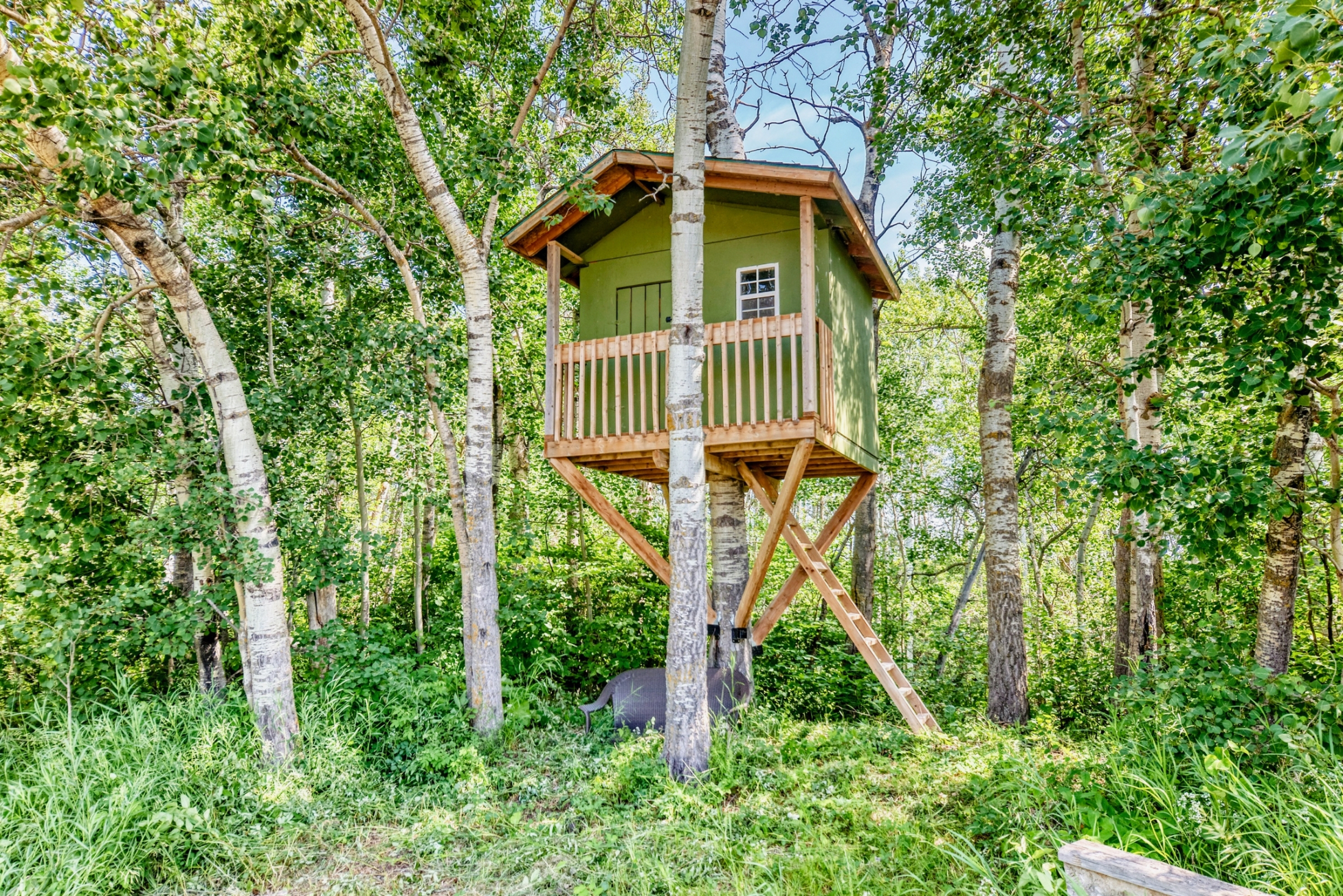
Executive custom-built 2-storey on 10 private acres with a permitted 2-bedroom guest home—ideal for multigenerational living, extended family, guests, or added flexibility. The main home offers an open-concept design with a chef-inspired kitchen featuring granite countertops, a massive island with Caribou butcher block, walk-through pantry, spacious dining area, main floor office, 5 bedrooms and 3.5 bathrooms. The luxurious primary suite features a spa-inspired ensuite with soaker tub, tiled shower, dual sinks and walk-in closet. The fully finished basement includes a large recreation room wired for 11.1 Dolby Atmos, while premium features include in-floor heating, central A/C, HRV, water treatment, central vacuum and a secure concrete vault with steel door and digital lock. The heated oversized garage even includes a dog wash. Outside you’ll find extensive decorative concrete, mature trees, exceptional privacy, a children’s treehouse and room to roam. A truly one-of-a-kind executive acreage.

Use the link below for more information and to book a showing.

Read

Why Acreage Living Is Having a Moment

More space. More privacy. More freedom. A different way of living.

For generations, acreage living has appealed to people who wanted something a little different from city life. More space. More privacy. A quieter setting. What has changed isn’t why people love acreages—it’s how many people are beginning to see the value they offer.

Across Alberta, and especially in communities surrounding Edmonton like Parkland County, Sturgeon County, Strathcona County, Leduc County and Lac Ste. Anne County, more buyers are looking beyond traditional suburban neighbourhoods and asking themselves a simple question:

“What kind of lifestyle do we really want?”

The answer, for many people, isn’t necessarily a bigger house. It’s a different way of living.


The Luxury of Silence

Silence is something most of us don’t think about until we experience it.

In many neighbourhoods, there’s always something happening. Traffic. Lawn mowers. Construction. Sirens. The constant hum of city life fades into the background because it’s always there.

Then you spend an evening on an acreage. 

You step outside and hear… almost nothing. Maybe the breeze moving through the trees. Birds calling in the distance. Leaves rustling overhead. The occasional coyote after sunset.

It’s remarkable how quickly that quiet begins to feel normal—and how noticeable its absence becomes when you return to the city.

Privacy plays a role too. Instead of looking directly into a neighbour’s kitchen window, you’re looking across mature trees, open fields, or your own piece of Alberta countryside.

For many acreage owners, that feeling of peace isn’t just a nice bonus. It’s one of the biggest reasons they never want to move back into the city.


The Sky

One of the first things people notice after moving to an acreage is something they probably never expected.

The sky.

Without rows of houses, apartment buildings, or commercial developments interrupting the horizon, the landscape suddenly feels enormous. Sunrises seem to arrive a little slower. Summer sunsets stretch on for what feels like forever, painting the sky in oranges, reds and deep purples long after dinner. Thunderstorms become something you watch instead of simply driving through. You can often see them building for kilometres before they arrive, rolling across the prairie with incredible power and beauty.

And then there are the stars.

Away from the city’s lights, the night sky comes alive. On clear evenings, thousands of stars appear overhead, reminding you just how much we’ve forgotten exists above us. It’s difficult to describe until you’ve experienced it yourself.


You Don’t Realize How Close Everything Is

One of the biggest misconceptions about acreage living is that you’re somehow “way out in the country.” In reality, many acreages surrounding Edmonton are surprisingly convenient.

Depending on where you live, Costco, schools, restaurants, grocery stores, recreation centres and even Edmonton International Airport may only be 20 to 40 minutes away. For many homeowners, that means enjoying the peace and privacy of acreage living without giving up the conveniences they use every day. You can spend your afternoon shopping in the city, meet friends for dinner downtown, attend an Oilers game, and still come home to complete quiet.

It really can be the best of both worlds.


Your Property Becomes Part of Your Lifestyle

One of the biggest differences between city living and acreage living is how you begin using your property. Instead of simply maintaining a yard, your property becomes an extension of your home.

One family might create walking trails through the trees. Another builds a fire pit where friends gather well into the evening. Children have room to explore, build forts, ride bikes, or simply disappear into the backyard for hours of outdoor adventure. Dogs have space to run. Gardens become larger. Greenhouses become possible. A heated shop becomes more than storage—it becomes a place to restore a classic car, build furniture, work on projects, or simply enjoy a hobby. There’s room for RVs, trailers and recreational vehicles without worrying about neighbourhood restrictions or finding off-site storage.

Every family uses the space differently. That’s the beauty of it. The property grows around your lifestyle instead of forcing your lifestyle to fit the property.


Home Has Changed

Over the past several years, our homes have taken on new roles.

For many people, they’re no longer simply places to eat dinner and sleep.

They’re home offices. Fitness rooms. Creative studios. Entertainment spaces. Places where children learn, families gather, and memories are made.

An acreage offers flexibility that’s increasingly difficult to find on a traditional suburban lot.

Need space for a workshop? A home office with complete privacy? A guest house for extended family? A place where grandchildren can spend entire weekends outdoors?

Those possibilities become much easier when space isn’t the limiting factor.


Why Buyers Are Looking Beyond the City Limits

Communities around Edmonton continue to grow. New neighbourhoods are being built. Lots are becoming smaller. Homes are often built closer together than they were a generation ago.

For many buyers, that works perfectly. Others find themselves wanting something different. 

Not because they dislike the city. Far from it. Most acreage owners still enjoy Edmonton’s restaurants, festivals, shopping, sporting events and cultural attractions. Many continue working in the city every day.

They’re not leaving the city behind. They’re simply choosing to come home to something different. To a quieter evening. A darker night sky. A little more privacy. A little more room. A little less rush.


It’s Not About Having More Land

People often assume the appeal of an acreage is simply owning more acres. In reality, that’s rarely what owners talk about.

They talk about drinking coffee on the deck while watching wildlife wander across the property. Watching their children discover nature instead of another cul-de-sac. Hosting family gatherings without wondering where everyone will park. Building the shop they’ve always wanted. Watching spectacular sunsets. Walking outside after dark and seeing the Milky Way.

It’s not really about owning ten acres instead of one. It’s about having the freedom to live a little differently.


Is Acreage Living Right for You?

Like any home, an acreage isn’t for everyone. There’s more property to care for, longer driveways to clear after a snowfall, and rural services that differ from those in the city.

But for many people, those responsibilities are a small trade-off for the lifestyle they gain in return.

Ultimately, buying an acreage isn’t just a real estate decision. It’s a lifestyle decision.


Featured Property

This month, I’m excited to be showcasing a property that captures so much of what makes acreage living special.

Located on 10 beautifully treed and private acres in Parkland County, just northwest of Edmonton, this executive custom-built two-storey home offers the space, privacy and flexibility that today’s buyers are increasingly looking for.

Beyond the beautifully appointed main residence, the property also includes a municipally approved two-bedroom guest home—ideal for multi-generational living, extended family, long-term guests, or simply providing options as life changes.

Whether it’s enjoying peaceful mornings on your own private acreage, gathering around a fire with family and friends, working in the heated oversized garage, or simply appreciating the quiet that comes with country living, this property is an excellent example of why acreage homes continue to capture people’s imagination.

If you’ve ever wondered whether acreage living might be right for you, I’d be happy to answer your questions or arrange a private tour. Sometimes, the best way to understand the appeal is simply to experience it for yourself.

More details at: 
https://myrealhome.com/recip.html/listing.e4498935-1226-twp-road-540-rural-parkland-county.109317155

Read

Open House. Open House on Saturday, July 4, 2026 1:00PM - 4:00PM
Join us for an Open House at this beautiful 4-bedroom, 3.5-bath home in Charlesworth! Features include a fully finished basement, double detached garage, central A/C, stone gas fireplace, ha

Please visit our Open House at 5233 2A Avenue SW in Edmonton. See details here

Open House on Saturday, July 4, 2026 1:00PM - 4:00PM Join us for an Open House at this beautiful 4-bedroom, 3.5-bath home in Charlesworth! Features include a fully finished basement, double detached garage, central A/C, stone gas fireplace, hardwood flooring, and a large fenced yard with deck, fire pit, and natural gas BBQ hookup. Conveniently located close to schools, parks, shopping, and transit. We look forward to seeing you!

Beautifully maintained 2-storey home in Charlesworth with over 1,590 sq ft above grade, 4 bedrooms, 3.5 bathrooms, a fully finished basement, and a double detached garage. A large covered front porch creates excellent curb appeal and a welcoming first impression.

Inside, you'll find a bright, open-concept main floor featuring gleaming hardwood flooring, fresh paint throughout, and a spacious living room filled with natural light. The well-appointed kitchen offers stainless steel appliances, a tile backsplash, corner pantry, ample cabinetry, and a functional island overlooking the generous dining area—perfect for family meals and entertaining. A versatile flex room near the front entrance makes an ideal home office, reading area, or play space. The main floor is completed by a convenient 2-piece bathroom.

Upstairs, the primary suite features a walk-in closet, built-in window storage/bench, and a private 4-piece ensuite. Two additional bedrooms and a full 4-piece bathroom provide plenty of space for family or guests.

The fully finished basement expands your living space with a large family room highlighted by a stunning stone-surround gas fireplace, a fourth bedroom, full bathroom, and laundry area.

Step outside to enjoy the fully fenced yard complete with a wood deck, natural gas BBQ hookup, fire pit area, and plenty of room for children, pets, and outdoor entertaining. Additional features include central air conditioning, HRV system, instant hot water, and a double detached garage with back-lane access.

Ideally located close to schools, parks, shopping, public transportation, and everyday amenities, this move-in-ready home offers exceptional value in a family-friendly community.

Read

For Sale - 5233 2A Avenue SW in Edmonton - $507,000 

I have listed a property at 5233 2A Avenue SW in Edmonton.

Located in Zone 53, Edmonton. MLS # E4495035

Beautifully maintained 2-storey home in Charlesworth with over 1,590 sq ft above grade, 4 bedrooms, 3.5 bathrooms, a fully finished basement, and a double detached garage. A large covered front porch creates excellent curb appeal and a welcoming first impression.

Inside, you'll find a bright, open-concept main floor featuring gleaming hardwood flooring, fresh paint throughout, and a spacious living room filled with natural light. The well-appointed kitchen offers stainless steel appliances, a tile backsplash, corner pantry, ample cabinetry, and a functional island overlooking the generous dining area—perfect for family meals and entertaining. A versatile flex room near the front entrance makes an ideal home office, reading area, or play space. The main floor is completed by a convenient 2-piece bathroom.

Upstairs, the primary suite features a walk-in closet, built-in window storage/bench, and a private 4-piece ensuite. Two additional bedrooms and a full 4-piece bathroom provide plenty of space for family or guests.

The fully finished basement expands your living space with a large family room highlighted by a stunning stone-surround gas fireplace, a fourth bedroom, full bathroom, and laundry area.

Step outside to enjoy the fully fenced yard complete with a wood deck, natural gas BBQ hookup, fire pit area, and plenty of room for children, pets, and outdoor entertaining. Additional features include central air conditioning, HRV system, instant hot water, and a double detached garage with back-lane access.

Ideally located close to schools, parks, shopping, public transportation, and everyday amenities, this move-in-ready home offers exceptional value in a family-friendly community.

Use the link below for more information and to book a showing.

Read
Categories:   activities | advice | affordability | alberta | appliances | autumn | backyard | bank | Bank of Canada | basement | bathroom | bedroom | bridge financing | budget | buyers | buying | buying a home | canada | checklist | Chipman, Chipman Real Estate | clutter | colour | community | condo | condos | credit | debt | design | diy | doors | economics | edmonton | Edmonton Real Estate | energy | events | fall | family | festivals | FHSA | fire | first-time buyers | First-Time Home Buyers | forecast | furniture | garden | gibbons | Gibbons, Gibbons Real Estate | halloween | haunted | health | hockey | holiday tips | home | Home Buying Advice | home life | home safety | home values | homeowner tips | homeownership | homes | house | housing | indoor air quality | interest rates | inventory | investing | investment | jubilee park | kitchen | lawn | lifestyle | lighting | listing | living room | maintenance | market | market update | migration | money | mortgage | Mortgage Tips | mortgages | moving | neighbourhood | Newcomers to Canada | october | office | oilers | oktoberfest | oliver | onoway | organization | outdoors | package theft | paint | patio | plumbing | price | pricing | project | property | pumpkins | radon | real estate | realestate | renovation | rent vs buy | river valley | room | Rural Parkland County, Rural Parkland County Real Estate | safety | saints | sale | seasonal | sellers | selling | selling your home | space | spending | spring | spruce grove | Spruce Grove Real Estate | sprucegrove | stony plain | Stony Plain, Stony Plain Real Estate | strategy | style | subject to sale | summer | timing | tips | tools | trends | u-pick | value | walls | water | weather | weeds | windows | winter | winter home tips | wood | work | Zone 01, Edmonton Real Estate | Zone 05, Edmonton Real Estate | zone 12 | zone 14 | zone 15 | zone 16 | Zone 16, Edmonton Real Estate | zone 20 | zone 27 | zone 29 | Zone 29, Edmonton Real Estate | Zone 53, Edmonton Real Estate | zone 55 | zone 58
Data last updated on November 16, 2026 at 05:30 PM (UTC).
Copyright 2026 by the REALTORS® Association of Edmonton. All Rights Reserved.
Data is deemed reliable but is not guaranteed accurate by the REALTORS® Association of Edmonton.
The trademarks REALTOR®, REALTORS® and the REALTOR® logo are controlled by The Canadian Real Estate Association (CREA) and identify real estate professionals who are members of CREA. The trademarks MLS®, Multiple Listing Service® and the associated logos are owned by CREA and identify the quality of services provided by real estate professionals who are members of CREA.